My earliest memories of growing food began in the garden my father planted while we were being homeschooled. Digging through fuzzy recollections, I remember the corn we hung to dry, the giant zucchini plants that seemed to take over the beds, and the enormous weed we carefully nurtured because we were convinced it was a cauliflower.
Even then, there was something grounding about growing food—about watching effort turn into something tangible, even when we didn’t fully understand what we were doing.
Sometime in my late twenties, while living on Hollywood Boulevard in a large studio apartment, that early memory resurfaced as a craving to plant. At the time, I was researching indoor vertical gardens and ways to grow my own food naturally—small acts of grounding in a life that felt increasingly untethered.
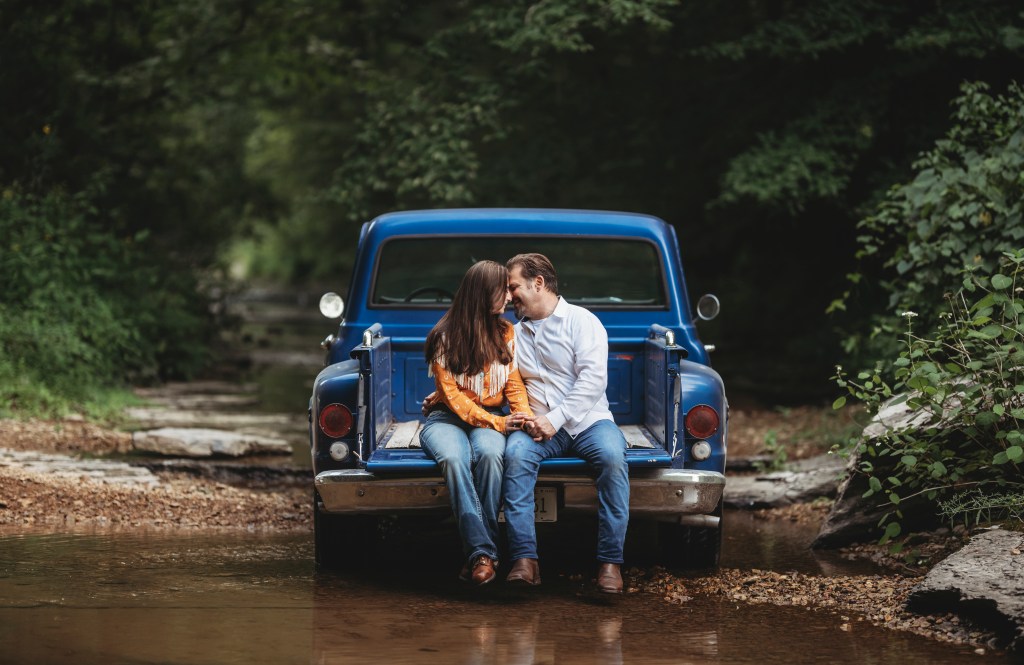
Fast forward to finishing my master’s degree and moving cross-country to Nashville, Tennessee, where I met and fell in love with my husband. His former career had been as a nursery owner, and his work now spans landscape design, installation, and construction. One of the first questions he charmed me with was, “What’s your favorite flower?”
At the time, I didn’t have an answer. There were too many that I loved. The lotus flowers I’d seen in temples in Malaysia. Orchids in Singapore. The tulips my dad sent me when I was a child. The roses my husband courted me with.
I still don’t have an answer to that question.
Especially now, as my world has expanded into pollinator habitat design and growth. I’m excited about the blue globe thistle patch we’re adding this year. I love wildflowers and butterfly bushes for the abundance of winged creatures they attract. I love sunflowers because they become napping spots for bumblebees, and crimson clover for its brilliance in May. There is simply too much to love to choose just one flower. If it were up to me—and if funds were unlimited—I would plant them all. I love dressing up the land.
Long before the farm existed in any formal sense, my husband found this property the way some places seem to want to be found. Wandering down a gated, grassy road nearly a decade ago, he followed the sound and movement of water and fell in love with the winding creeks that traverse the land. When we began carving out a home among the trees, we also began imagining a life together here—one shaped by attention, shared work, and the possibility of earning a humble living from the land.
But that isn’t how I came to farming.
I came to farming through an unusual pathway.
My closest neighbors claim to be farmers. They’ve paired thirteen goats with a single livestock guardian each, created a junkyard at the corner of their property where they traffic in electrical supplies for commercial projects, and leave broken vehicles they have no interest in repairing. They’ve also extended their fence into a shared easement so their dogs can roam and howl twenty-four hours a day.
Our disputes with the Building Commissioner—who consistently avoids confrontation due to their relationship with a county commissioner and their conduct at public meetings—forced me to look more closely at the definition of farming, Tennessee’s Right to Farm laws, and how easily the appearance of agriculture can be used as a shield—particularly in wooded areas where the impacts are assumed to be invisible and inconsequential.
In proving what they were not, I found who I wanted to be.
Around that time, I began looking at our wooded paradise differently. Learning about value-added products, cottage food laws, and which plants could produce offerings worth preserving led me down the path of formally registering our land with the USDA.
I’ve always loved learning—perhaps a little too much. I took many courses that never resolved into a defined career, but instead opened my mind to creative thought and alternate perspectives. Farming, with its blend of book knowledge and hands-on application, has kept my active mind engaged. I exist now in a constant state of learning.
And my world expanded.
The farm is no longer limited by fence lines. It has grown into something like a small universe. Every day brings new questions—from weeds to insects to seeds, from soil health to the ways human intervention can both support and damage micro- and macro-ecological systems. Sometimes I don’t even realize how much knowledge I’ve absorbed until I give a farm tour and the words spill out—explaining why we choose to farm this way, why our orchards, flowers, and vineyards are organized as they are.
Somewhere in the years leading up to formally establishing the farm, a shift occurred inside me.
Anyone intent on producing food for consumption and community eventually reaches this fork. When you do, it begins to define who you are, what your purpose is, and how you approach food. To qualify for many USDA programs, grants, and insurance plans, a farm must make concessions—choices that sanitize the end product and, over time, damage the earth.
The alternative is choosing sustainability: biodynamics, livestock integration, natural weed and pest control, and thoughtful water practices.
I don’t believe one approach is inherently better than the other. Feeding billions of people requires multiple systems, just as holistic and modern medicine work best when they exist together rather than in opposition.
But for me, on this small scale, thinking about legacy matters. The ripple effects I want to leave. The life I want to have lived. The experiences I want to internalize. Those things outweighed the potential gains of farming purely for profit.
I’m willing to forgo perfect products in order to stay aligned with who I am—and who I’m becoming.
That choice means diversifying crops and weathering short yields. It means exploring alternate pathways to sustainability through partnerships and community engagement. It means learning how to maximize minimal impact, working with nature through espaliered designs rather than carving against it, and shaping a humble living within an existing ecosystem.
This is my farm.
And this is my blog.
I hope my journey encourages authenticity in your own food choices. Even if growing food yourself feels distant or impractical, I hope this connects you to local systems, introduces you to new friends and neighbors, and helps you imagine the world you want to live in.